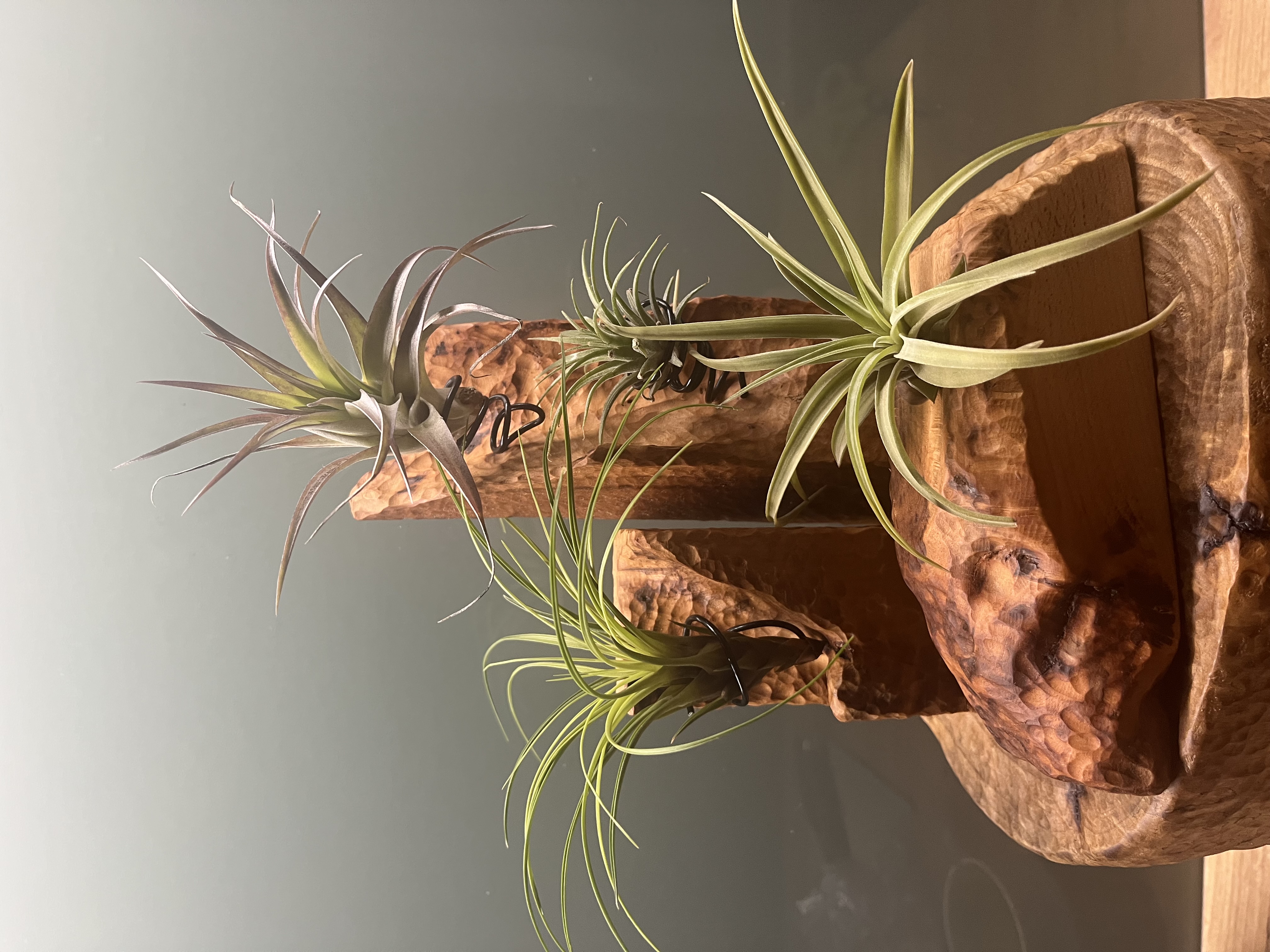
What are air plants? A complete guide to Tillandsias
What Are Tillandsias?
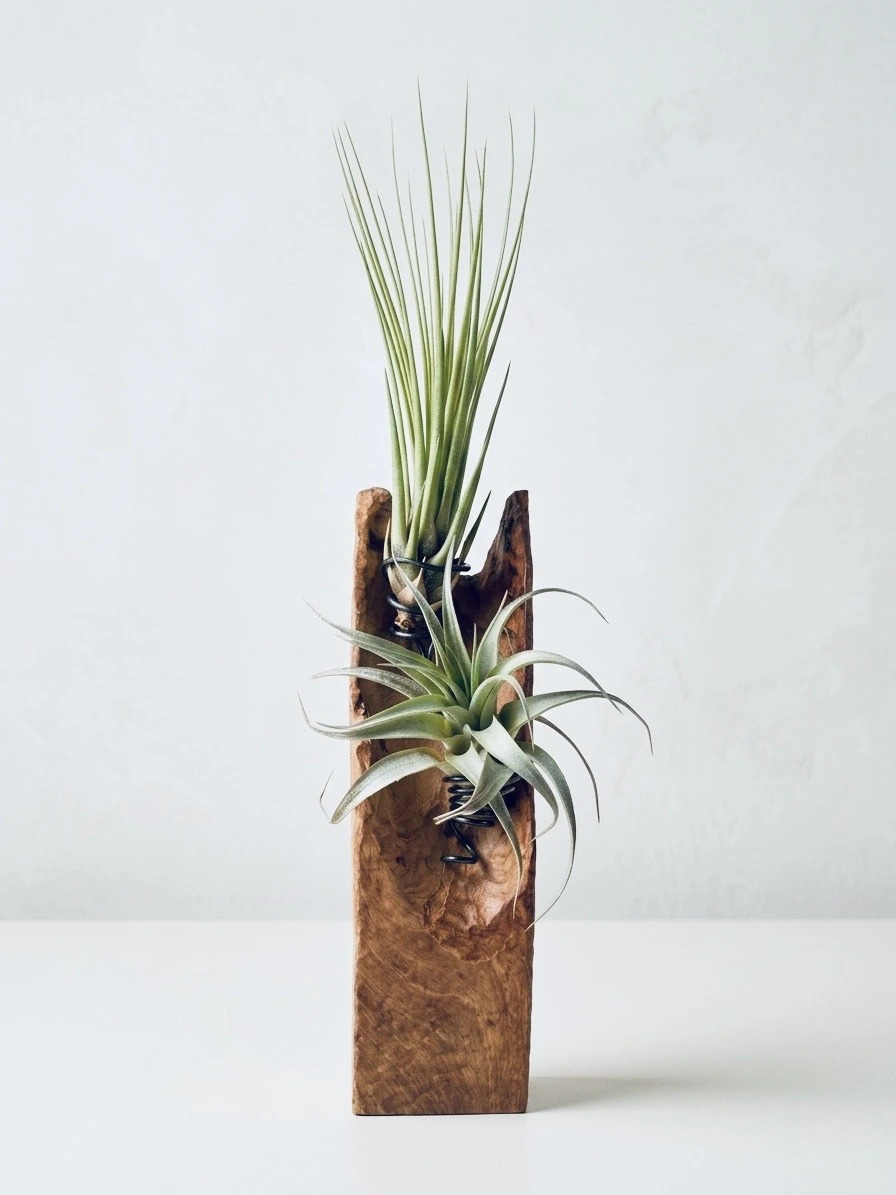
Tillandsias, often referred to as air plants, are among the most fascinating plants you can grow at home. Unlike most houseplants, they do not need traditional soil or pots. They absorb nutrients and water directly from the air through specialized cells on the surface of their leaves.
This unique trait makes air plants a popular decorative element in modern interiors. You can place them in glass terrariums, on wooden roots, stones, or hang them freely in the air.
Where Do Tillandsias Come From?
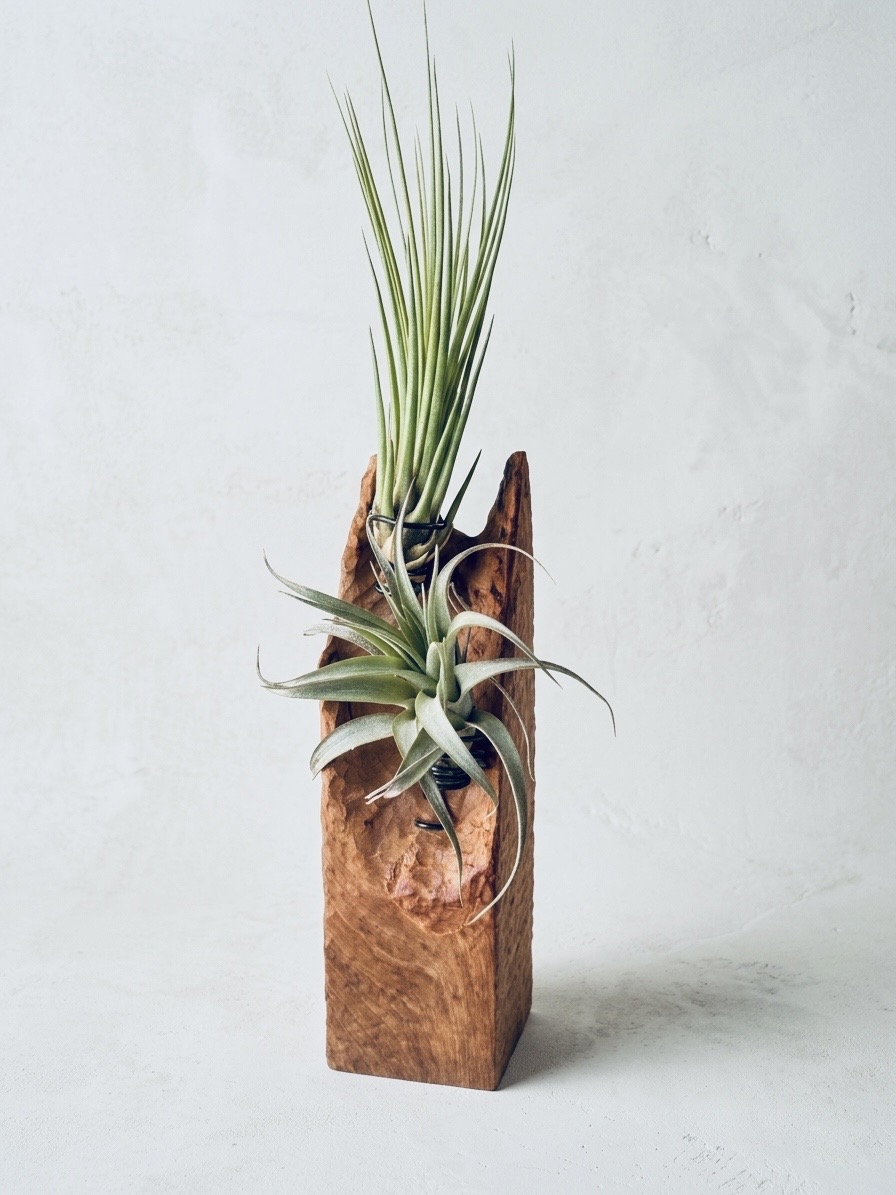
Tillandsias belong to the bromeliad family (Bromeliaceae). In nature, they mainly grow in: South America, Central America, Mexico, or the southern regions of the USA.
They can be found in rainforests, mountainous regions, and drier desert environments. Most species grow as epiphytes. This means they naturally attach themselves to trees, rocks, or other surfaces without extracting nutrients from them.
Why Don't Air Plants Need Soil?
Many beginners are surprised to discover that Tillandsias grow completely without soil. The reason lies in tiny specialized structures called trichomes. These cover the surface of the leaves and act as miniature reservoirs for water and nutrients.
Trichomes can: capture air humidity, absorb rainwater, take up nutrients dissolved in water, and protect the plant from strong sunlight.
Thanks to trichomes, Tillandsias can thrive even without a root system in a substrate.
What Do Tillandsias Look Like?
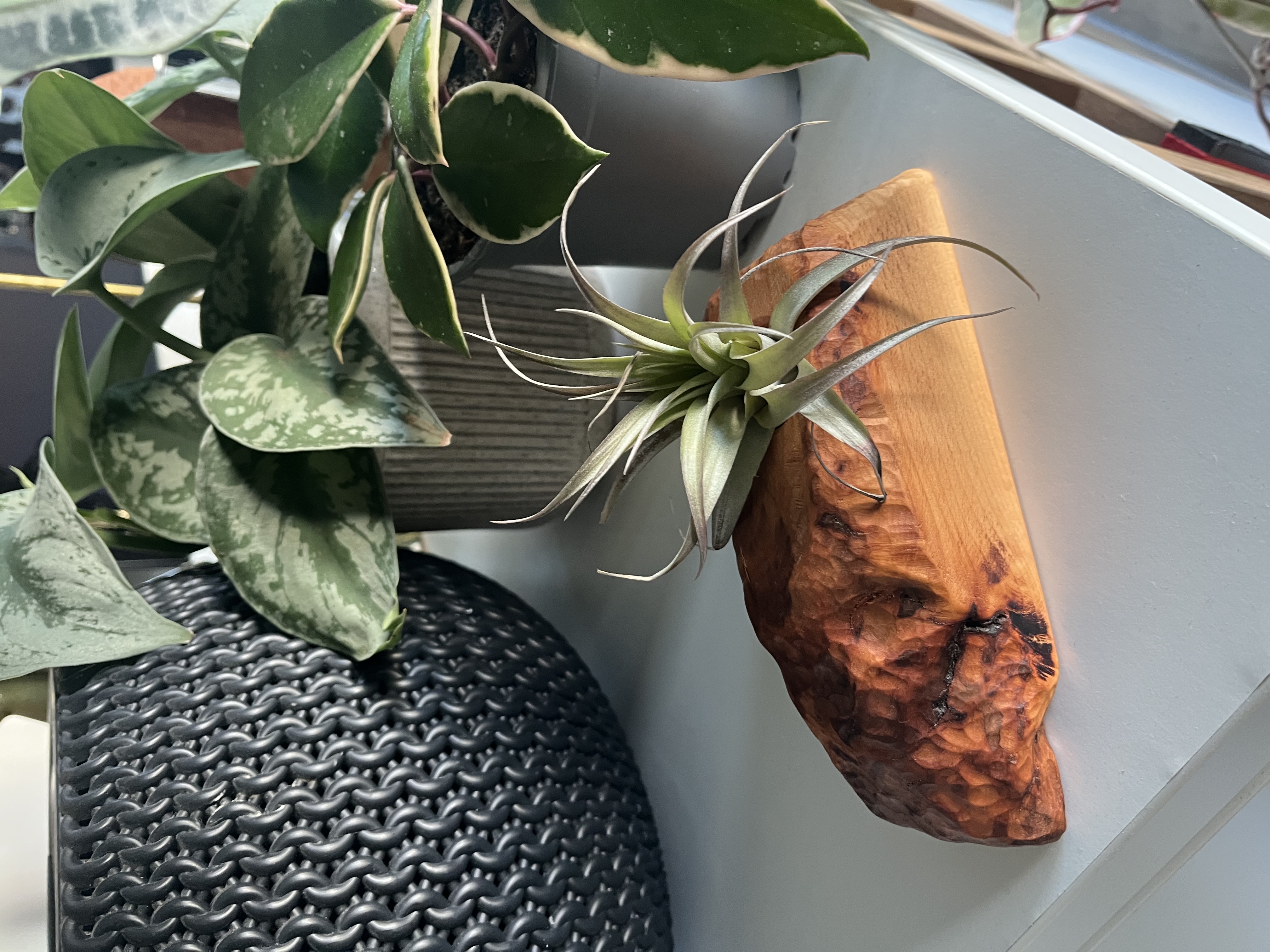
There are over 650 species of Tillandsias. Some form dense silvery rosettes, while others feature long twisted leaves resembling tentacles. Among the most popular are:
- Tillandsia Ionantha - the best-selling species for beginners. Its leaves turn vibrant red prior to blooming.
- Tillandsia Xerographica - considered the queen of air plants. It features a large rosette of silvery-grey leaves.
- Tillandsia Caput Medusae - its snake-like leaves resemble Medusa's hair.
- Tillandsia Bulbosa - features a characteristic bulbous base and wavy leaves.
What Are the Benefits of Growing Air Plants?
- Low maintenance care - air plants require no repotting or substrate changes.
- Unique appearance - every species looks distinct, creating an eye-catching design accent.
- Versatile display options - you can display them: in glass containers, on wood, on rocks, in hanging decor, in terrariums.
- Space saving - they take up minimal room and are perfect for smaller apartments.
Are Tillandsias Suitable for Beginners?
Yes. That is why they are frequently recommended to people with little plant care experience.
By following basic care guidelines, they can thrive for many years.
The most essential factors are: plenty of bright indirect light, regular soaking/bathing, good air circulation, avoiding prolonged excess moisture.
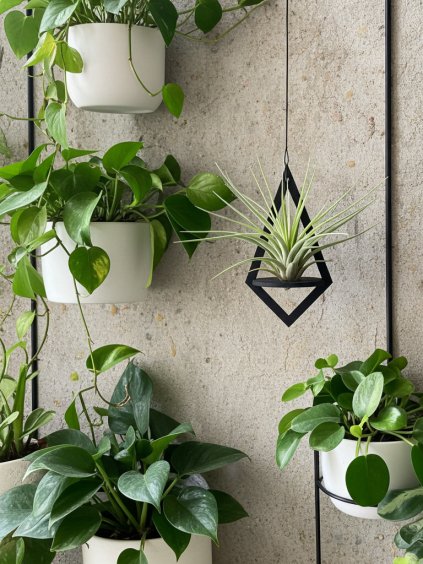
WoodenBotanery Hanging Air Plant Holder DIAMOND Ebony
View details
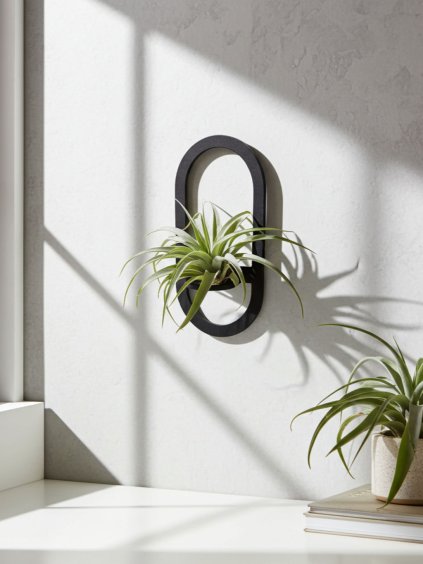
WoodenBotanery Wall Air Plant Holder OVAL Ebony
View details
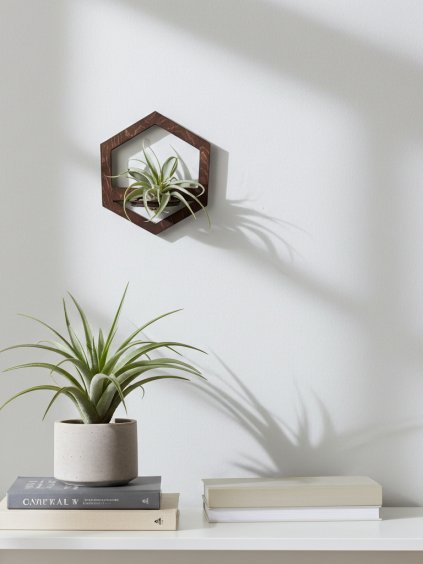
WoodenBotanery Wall Air Plant Holder HEXAGON - Dark Brown
View details

WoodenBotanery Air Plant Holder FLEXI 3in1 - Natural Wood
View details
Do Tillandsias Bloom?
Yes. Most species bloom once in their lifetime. Prior to flowering, their foliage often turns vibrant colors and produces striking flower spikes. After blooming, the mother plant gradually produces pups (offshoots) that grow into new plants. This is how Tillandsias naturally propagate.
Common Myths About Tillandsias
- Air plants don't need water - false. Although they grow without soil, they require regular hydration.
- They can grow in complete darkness - no. They need ample light for photosynthesis.
- They are fake plants - Tillandsias are real, fully living plants.
Conclusion
Tillandsias represent a fascinating world of plants that can grow without soil while creating unique interior decorations. Thanks to easy care, a wide variety of species, and a modern aesthetic, they are among today's most popular houseplants.
If you are just getting started, species like Ionantha, Caput Medusae, or Bulbosa are ideal choices. In the next article, we will take a detailed look at how to properly care for Tillandsias, water them, and provide them with ideal growing conditions.
Read also:
- What are air plants? A complete guide to Tillandsias
- How to care for air plants? Complete beginner's guide
- Most beautiful air plant species and their characteristics
- Where to place air plants? Ideal spots for home and office
- How to display air plants? 10 creative decor ideas
- How to water air plants? Proper routine and common mistakes
- Why is my air plant drying out or rotting?
- Air plant blooming and propagation guide
- Air plants as modern interior decor
- Air plants for beginners – 10 reasons why you'll love them
- Are air plants safe for cats and dogs?
- Most frequently asked questions about air plants (FAQ)
- Air plants as an original gift – why every plant lover will adore them
- How to fertilize air plants and boost growth
- Air plants in the bathroom – yes or no?
- Why air plants are perfect for modern interiors