
1. Saving the Leaves: Yellowing, Wilting, and Falling Off
-2.jpg)
Leaves are the mirror of your houseplant’s health. Any mistakes in watering, placement, or humidity show up on them first. Let's look at the most common indoor plant problems and how to bring vitality back to your home jungle.
How to fix brown tips on plant leaves and crispy edges?
Drying houseplant leaves and browning leaf tips are most commonly a reaction to extremely dry air. Brown tips on plant leaves are especially frequent due to heating during winter months. Another reason why brown leaf edges form is watering with hard tap water, which causes mineral salts to build up in the leaves and literally burn them.
Dry brown parts will never turn green again. Grab clean scissors and carefully trim the dry edges, but always leave a millimeter of dry border. Do not cut into living green tissue, otherwise the leaf will start drying out again. From now on, always let your watering water sit for at least 24 hours.
Move the plant away from hot radiators. You can increase humidity locally by placing a wider saucer with water and expanded clay (LECA) under the pot. To distribute room humidity better and ensure plants don't sit on cold or overheated floors, it's ideal to elevate them – for instance, on our solid wooden plant stands, which provide better airflow around your plants.
Why are houseplant leaves turning yellow with spots?
Figuring out why leaves turn yellow requires looking at which leaves are affected. Lower leaves turning yellow (gradual dying of the oldest leaves) is a natural aging process. However, if the entire plant turns yellow or if you notice large yellow spots on monstera leaves, it is almost always due to severe overwatering and root suffocation from lack of oxygen.
Stick your finger deep into the soil. If the substrate is waterlogged, heavy, and smells bad, stop watering immediately. In severe cases of overwatering, remove the plant from its pot right away, strip off the wet soil, cut off root rot (mushy roots) with sanitized shears, and repot into fresh, well-draining soil mix. For naturally aging bottom leaves, simply let them dry out and gently peel them off.
Never water a plant just because it’s on your schedule. Always check first if the top inch (3 cm) of soil has dried out completely. Use only pots with drainage holes so excess water can freely escape.

WoodenBotanery Wall-mounted Plant Stand LUNA Acacia
View details
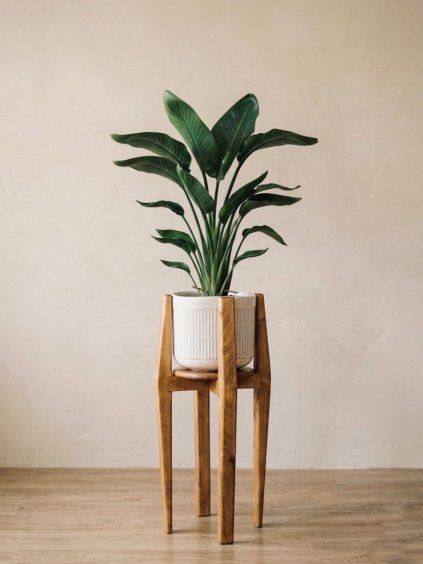
WoodenBotanery VERTIGO MAX 360° – Rotating Wooden Plant Stand (68 cm) Color: Light Walnut, Size: up to 22 cm
View details

ESSENTIA II – Wall-mounted Plant Stand made of Ash and Acacia | Woodenbotanery
View details
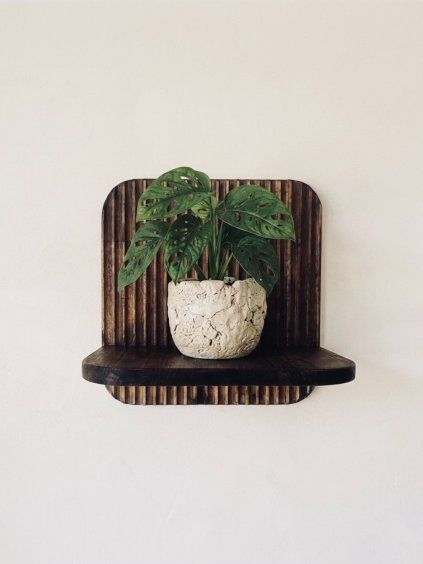
WoodenBotanery Wall Plant Shelf UNDA MINIMA
View details
Why is my plant dropping leaves, curling, and wilting?
Your plant is experiencing acute shock. Leaves curling inward is a desperate attempt to reduce surface area and cut water loss. Sudden loss of green leaves (a common search issue when ficus drops leaves) points to extreme stress from cold drafts, sudden temperature drops, or relocation. A major mystery is wilted leaves even after watering – this explains why a plant wilts in wet soil: its roots have rotted and can no longer draw water up.
In cases of overwatering and root rot, immediate repotting is crucial (same as with yellowing). Conversely, if the plant is bone dry, soak the entire pot in a bucket of water for 30 minutes so the root ball absorbs moisture. If leaf drop is caused by environmental shock, leave the plant alone and avoid moving it around.
Find a stable, bright spot for your plants away from AC units or drafts. Stability is key when preventing leaf drop. Once you find the perfect place for your houseplant—for example on a handcrafted wooden plant riser—leave it there, as plants dislike frequent repositioning.
What do strange spots and dots on leaves mean?
Localized leaf issues often signal infection or pests. Brown spots on leaves with yellow halos are classic signs of fungal or bacterial plant diseases. Dry, pale patches are usually leaf sunburn. Any tiny black dots on leaves are typically pest droppings (e.g. thrips), while small white spots on leaves can indicate powdery mildew or sap-sucking insect damage.
Quarantine the plant immediately. Prune and throw away fungus-infected leaves right away to prevent rapid spread. Move sunburned plants out of direct sunlight. If you suspect plant pests, rinse the entire plant with lukewarm water and apply an organic insecticide (such as neem oil) or a target chemical treatment depending on the bug type.
Ensure better airflow around your plants to prevent fungal infections. Avoid misting plant leaves in direct sunlight (water drops act as magnifying glasses and cause burns). For climbing plants, provide proper support—the more air circulating around the leaves, the more resistant they are to pests.