Aglaonema White Joy – How to Grow It, How to Care for It, and Why It's One of My Favorite Houseplants
Aglaonema White Joy – Growing, Care, and Why It's One of My Favorite Houseplants
Some Plants You Buy, Others You Fall in Love With
There are houseplants that catch your eye at first glance, but after a few months, you barely notice them in your home anymore. And then there are those that almost every visitor stops by to ask: “What kind of plant is that?”
For me, Aglaonema White Joy is exactly that kind of plant.
I've been growing it for over two and a half years, and during that time it has become one of my absolute favorite houseplants. Not because it is demanding or extraordinarily rare. Quite the opposite. It is beautiful, low-maintenance, and forgiving of minor care mistakes.
If I were to recommend just one plant to someone starting out with houseplants today, White Joy would be right at the top of my list.
In Short
If you don't have time to read the whole article, here is the most important part.
Aglaonema White Joy is an easy-care houseplant. It prefers bright indirect light, well-draining soil, and moderate watering. It tolerates short periods of drying out much better than overwatering. With proper care, it produces new offshoots, grows compactly, and brightens up any interior with its white and green leaves.
In This Article, You Will Learn
- why Aglaonema White Joy is great for beginners,
- how to grow Aglaonema so it thrives for years,
- how often to water Aglaonema and why overwatering does more harm than underwatering,
- what light it needs to maintain its beautiful white leaves,
- how to tell when it's thirsty,
- why Aglaonema leaves turn yellow or brown,
- how to properly repot and propagate it,
- what other Aglaonema varieties exist,
- whether Aglaonema is toxic to children or pets.
What Is an Aglaonema?
You might have heard of it, or perhaps you're already growing one at home, but if you're encountering this genus for the first time, here is a quick overview.
Aglaonemas originate from the tropical regions of Southeast Asia, where they grow beneath forest canopies. That explains why they thrive so well in our homes. They don't need direct sunlight, prefer bright indirect light, and aren't plants that require daily attention. That is precisely why they are frequently recommended to beginners.
Today, there are dozens of gorgeous cultivars – from deep green to silver, pink, or almost pure white. And Aglaonema White Joy is certainly one of the most striking among them.
Why Is White Joy My Favorite?
I have to admit, I grow several species of Aglaonema at home. Each has its own charm, but if I could only keep one, it would definitely be White Joy.
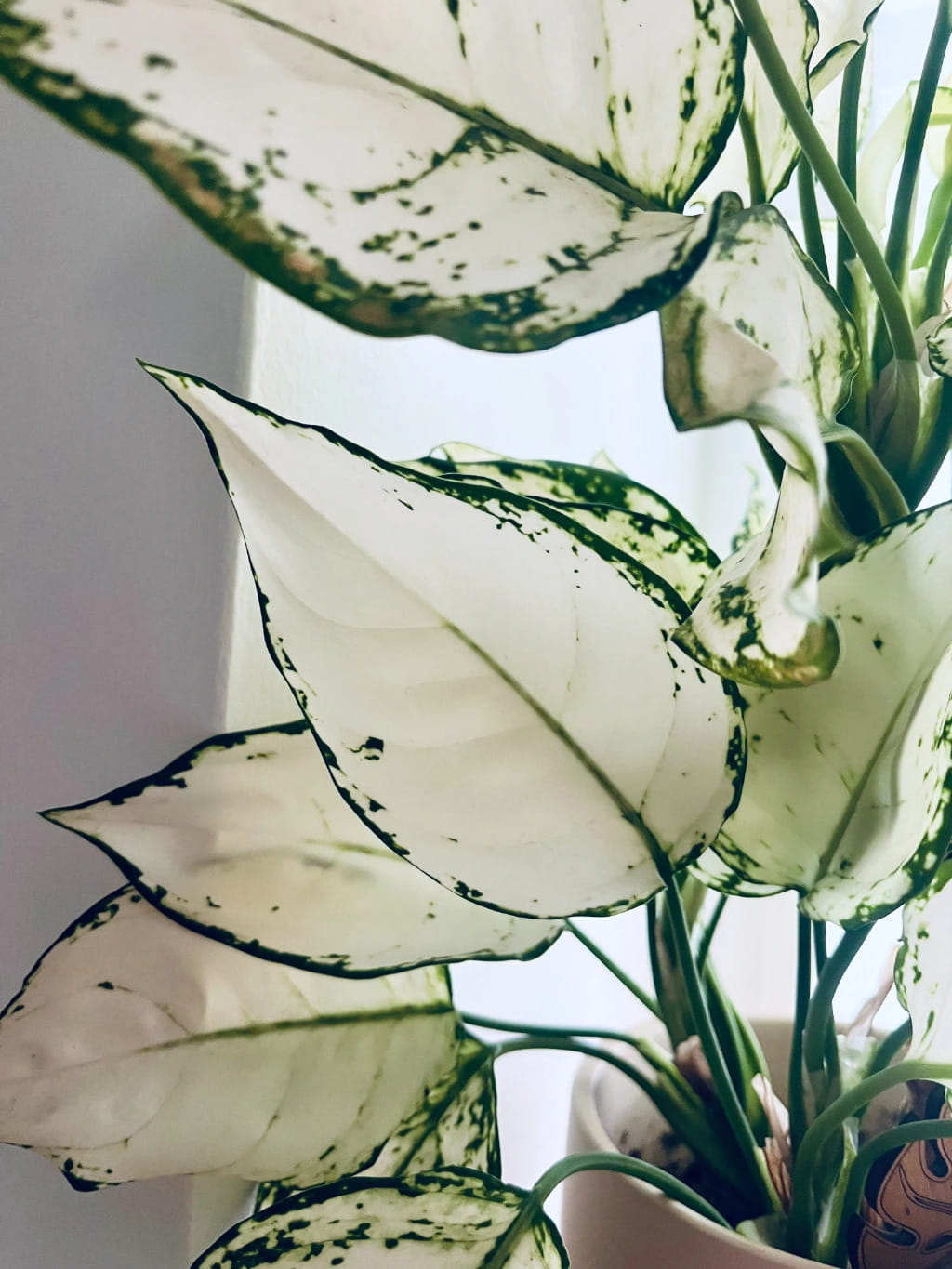
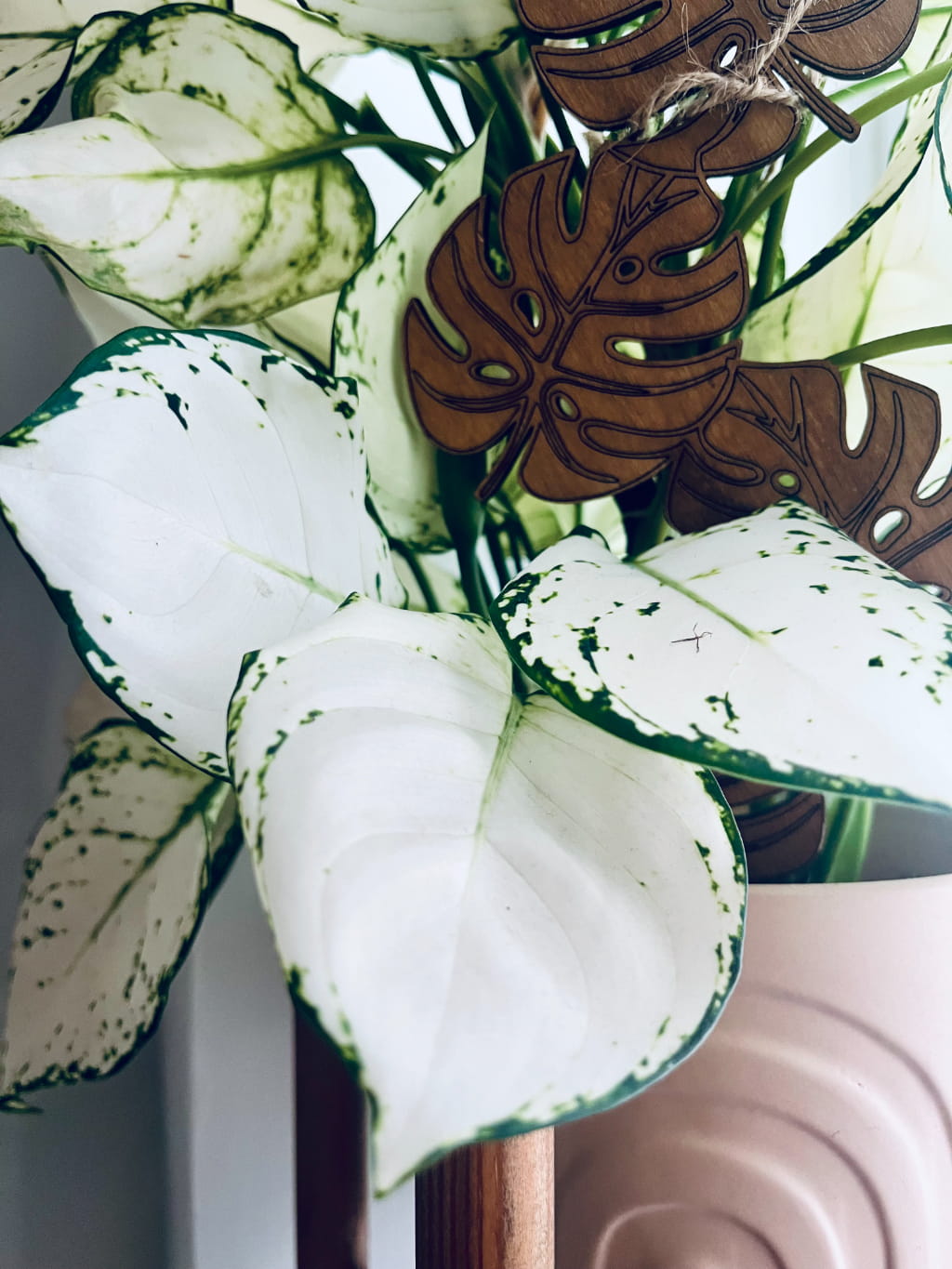
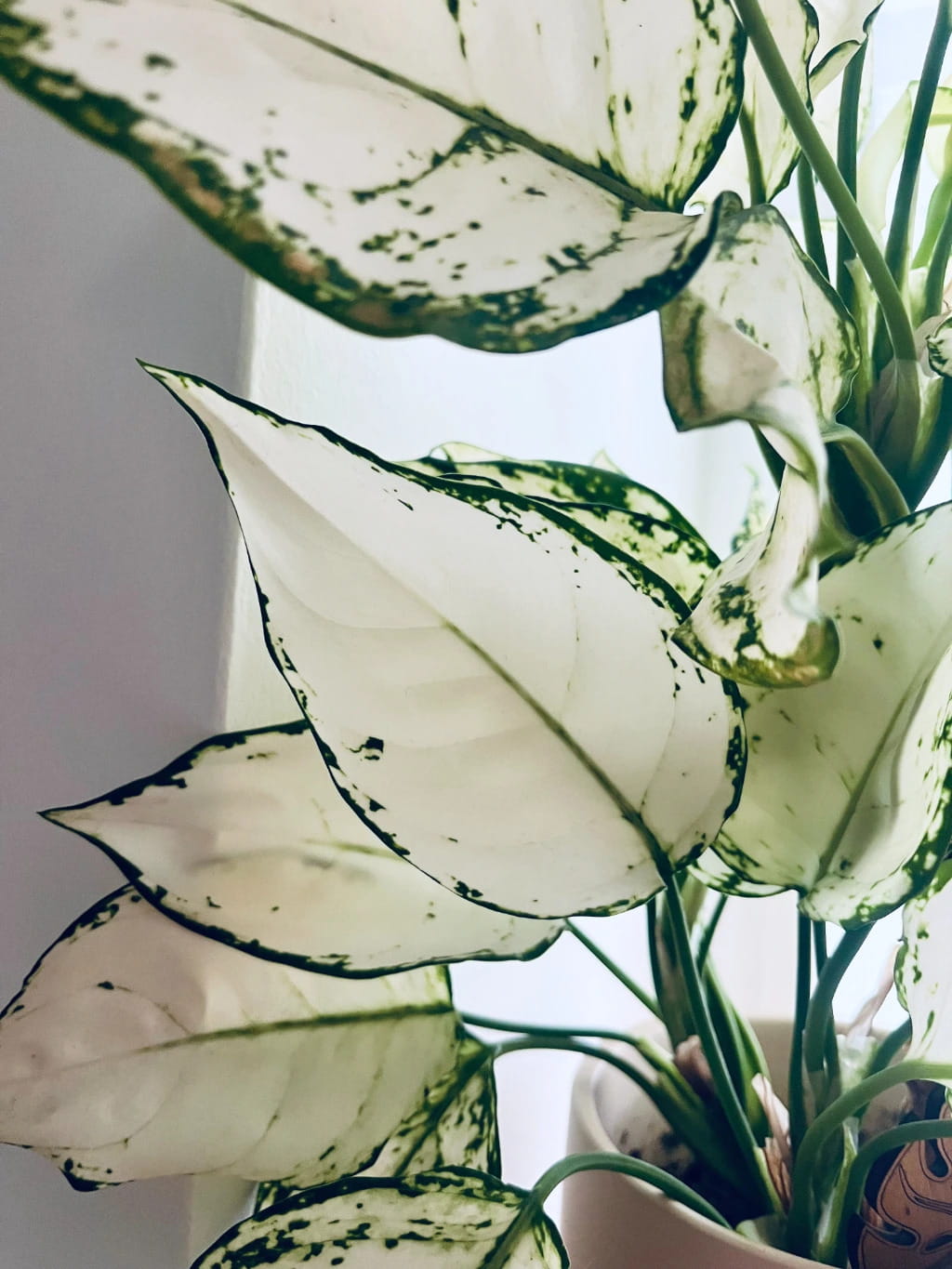
Its white leaves with green borders look elegant, modern, and very natural. Whether you place it in a minimalist interior or among a jungle of other plants – it always finds a way to stand out.
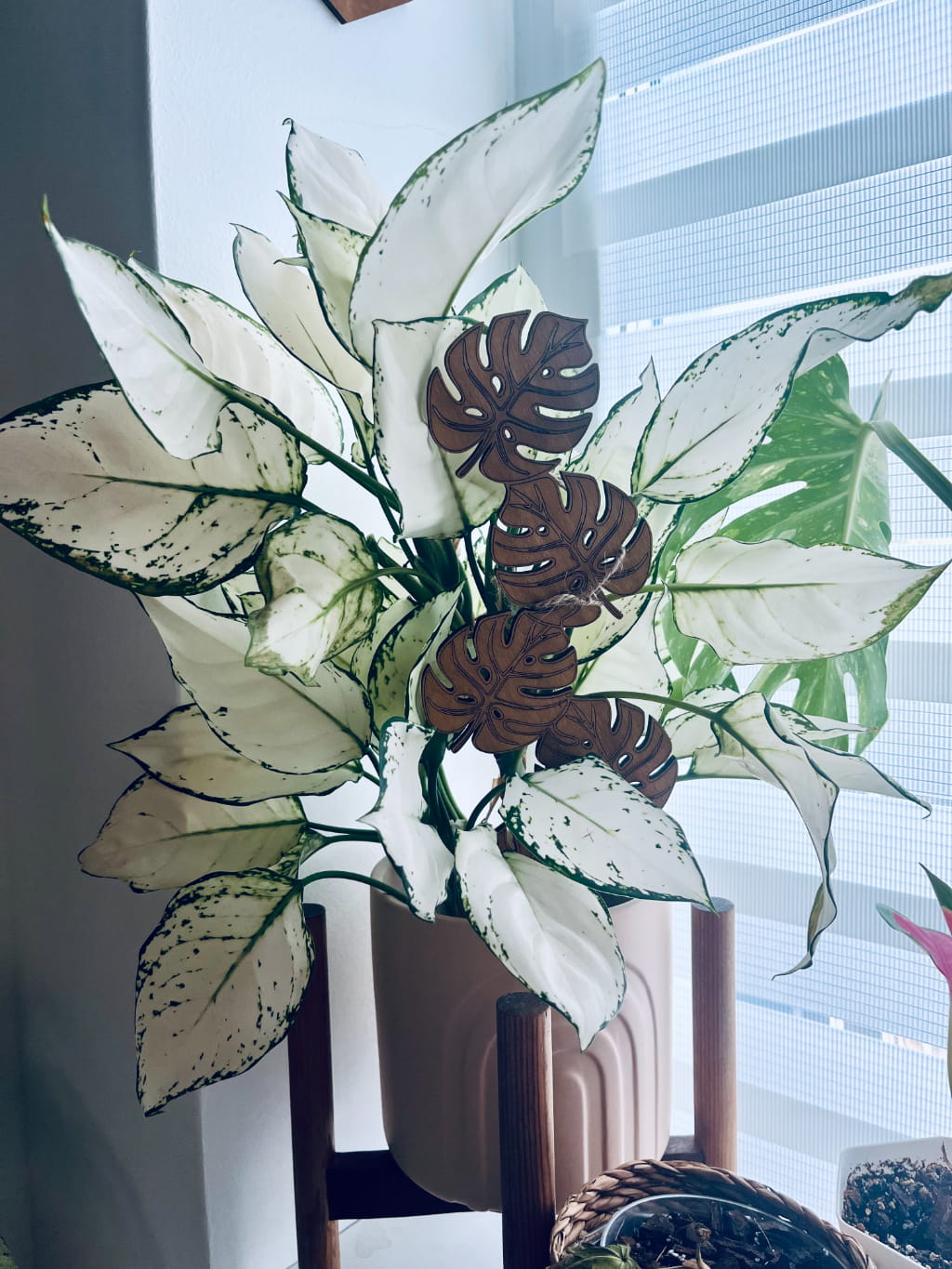
I've been growing my White Joy for about 2.5 years. In that time, it has produced three new pups, grown wonderfully full, and still looks healthy.
That's why all the photos in this article feature this specific plant. Not because other Aglaonemas aren't pretty, but because I've tested White Joy the longest and can share my personal experience.
How to Grow Aglaonema White Joy
If you typed “how to grow Aglaonema” into Google, I have good news for you. It's not a plant that will constantly throw new problems at you. Just follow a few simple rules.
Give It Plenty of Bright Indirect Light
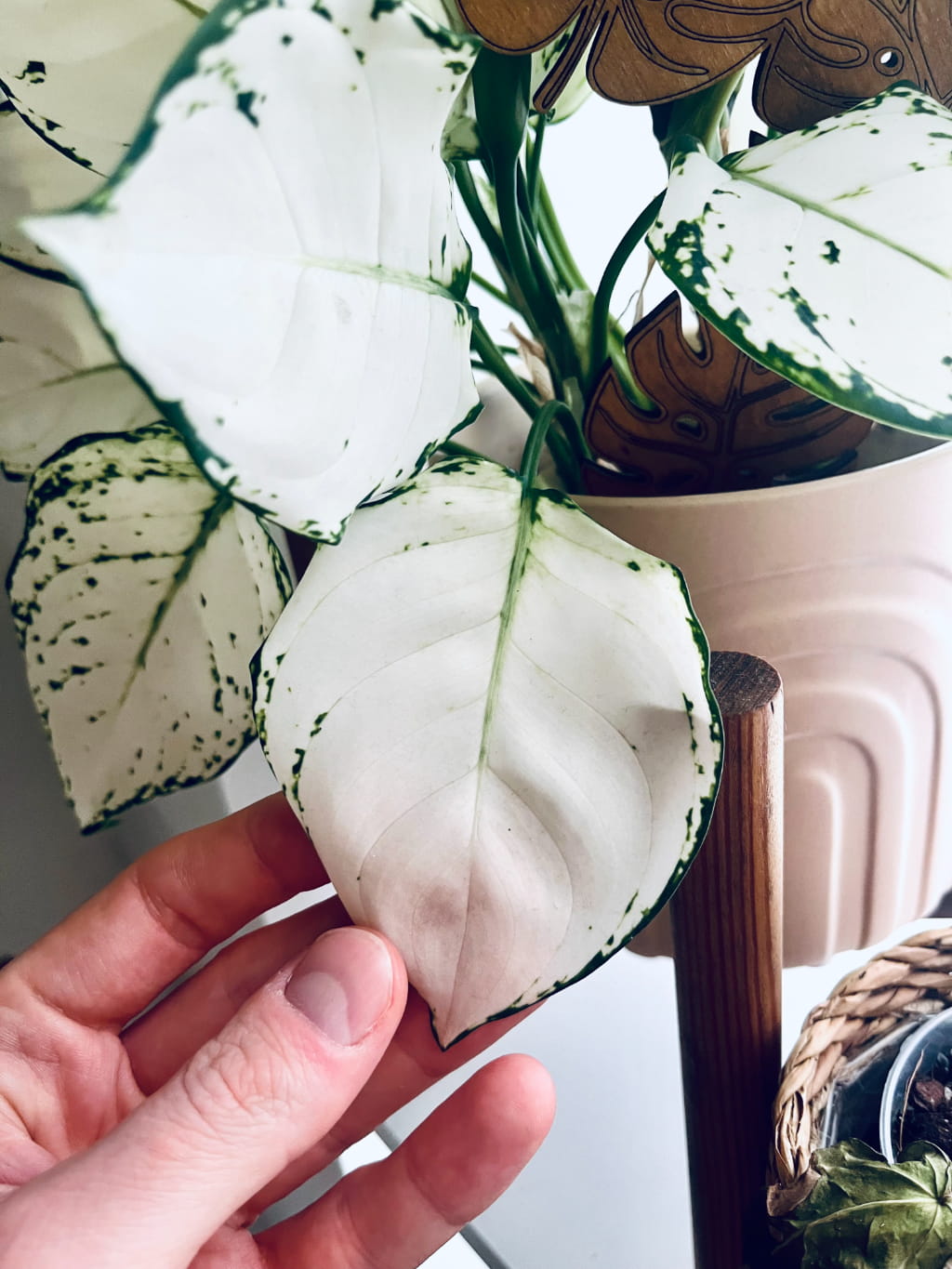
White Joy is one of the lighter cultivars. The more white foliage a plant has, the more light it needs. However, watch out for direct summer sun. The white parts of the leaves are more sensitive and can burn easily. If you're wondering whether Aglaonema can be kept in direct sunlight, my answer is no. At home, I use day-and-night blinds, which allow me to adjust the light levels.
It will do best near a window with plenty of bright indirect light.
What Soil Does It Need?
Aglaonema doesn't like sitting in wet soil for long periods. That's why I use a light, airy soil mix that drains excess water efficiently. A standard potting mix for houseplants enriched with perlite or fine pine bark works great. This ensures the roots get enough oxygen and significantly reduces the risk of root rot.
Aglaonema – Watering
If I had to give just one piece of advice that determines success in growing Aglaonema, it would be this: Aglaonema tolerates drying out much better than overwatering.
This rule has proven true time and time again over my two-plus years of growing it. I water my White Joy about once a week, sometimes even less. However, I never follow a rigid schedule. I always check the soil first. If it's still damp, I simply don't water.
Many people ask: How often should I water my Aglaonema? There is no one-size-fits-all answer. In summer, it may need water once a week, while in winter, once every two weeks might be enough. It depends on ambient temperature, pot size, and available light.
How to Tell When It's Thirsty?
There's one thing I really love about White Joy: I don't have to guess if it needs water. It tells me itself. When the soil has been dry for too long, the leaves droop slightly. Not dramatically, but you'll notice it. After watering, they firm back up in a short time. That's another reason why I recommend this plant to beginners.
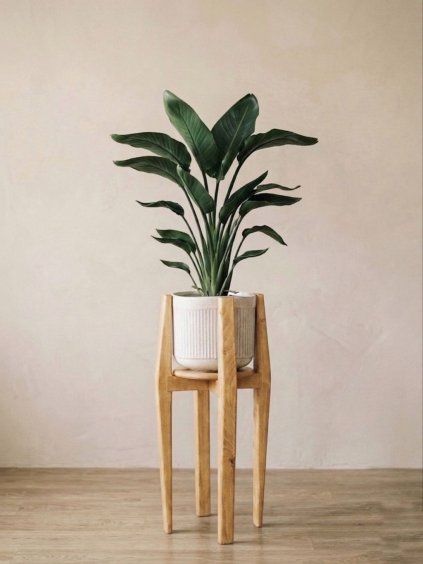
WoodenBotanery VERTIGO MAX 360° – Rotating Wooden Plant Stand (68 cm) Color: Light oak, Size: up to 25 cm
View details
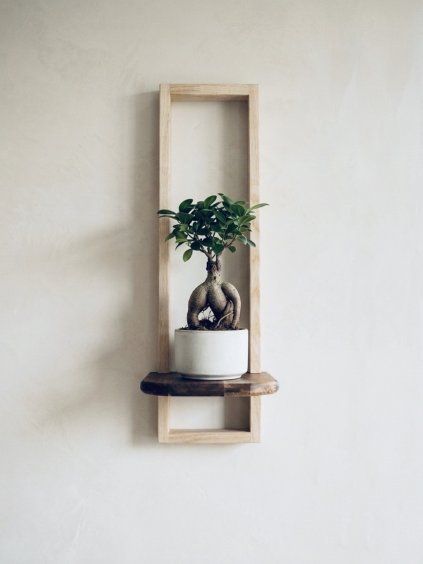
ESSENTIA – Wall-mounted plant stand made of ash and acacia
View details
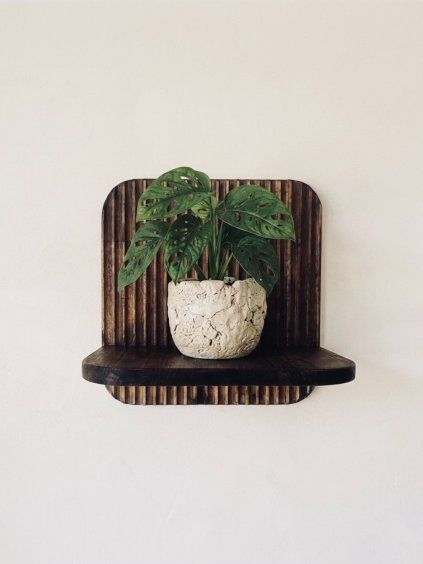
WoodenBotanery UNDA MINIMA Wall-Mounted Plant Stand
View details

WoodenBotanery ROBUR Wooden Flower Stand—Oak and Ash
View details
Why Do Aglaonema Leaves Turn Yellow?
One of the most common questions I get is: “Why are my Aglaonema leaves turning yellow?” In most cases, the answer is simple. The cause is overwatering. If the roots stay in waterlogged soil too long, they stop absorbing oxygen, start rotting, and the plant responds by yellowing its leaves. Of course, an old leaf will occasionally turn yellow and drop off naturally. That's a normal part of growth. But if multiple leaves turn yellow at once, check your watering habits first.
Why Does Aglaonema Get Brown Leaves?
Brown tips or edges on leaves can have several causes. Most commonly, it's due to overly dry air, hard tap water, direct sunlight, or inconsistent watering. With White Joy, I pay extra attention to direct sunlight. White areas of the leaves are more sensitive and get damaged faster than on dark green varieties.
How to Save an Overwatered Aglaonema?
If you accidentally overwatered your plant, all hope is not lost. Remove it from the pot, inspect the roots, and cut away any soft or brown parts. Then repot it into fresh, airy substrate and wait a few days before watering again. In most cases, the plant can recover if you catch the issue early enough.
How to Properly Repot Aglaonema White Joy
Repotting an Aglaonema isn't something you need to do every year. This plant doesn't grow extremely fast, and it actually prefers being slightly root-bound.
However, if you notice roots growing out of the drainage holes, the soil drying out extremely quickly, the plant stopping new growth, or the pot becoming visibly too small, it's time to repot. The best time for repotting Aglaonema is spring or early summer, when the plant naturally has the most energy for new growth.
When repotting, I always choose a pot that is only slightly larger. A pot that is too large can keep the soil wet for too long, increasing the risk of overwatering. And as I mentioned above – wet roots are an Aglaonema's worst enemy.
How to Propagate Aglaonema?
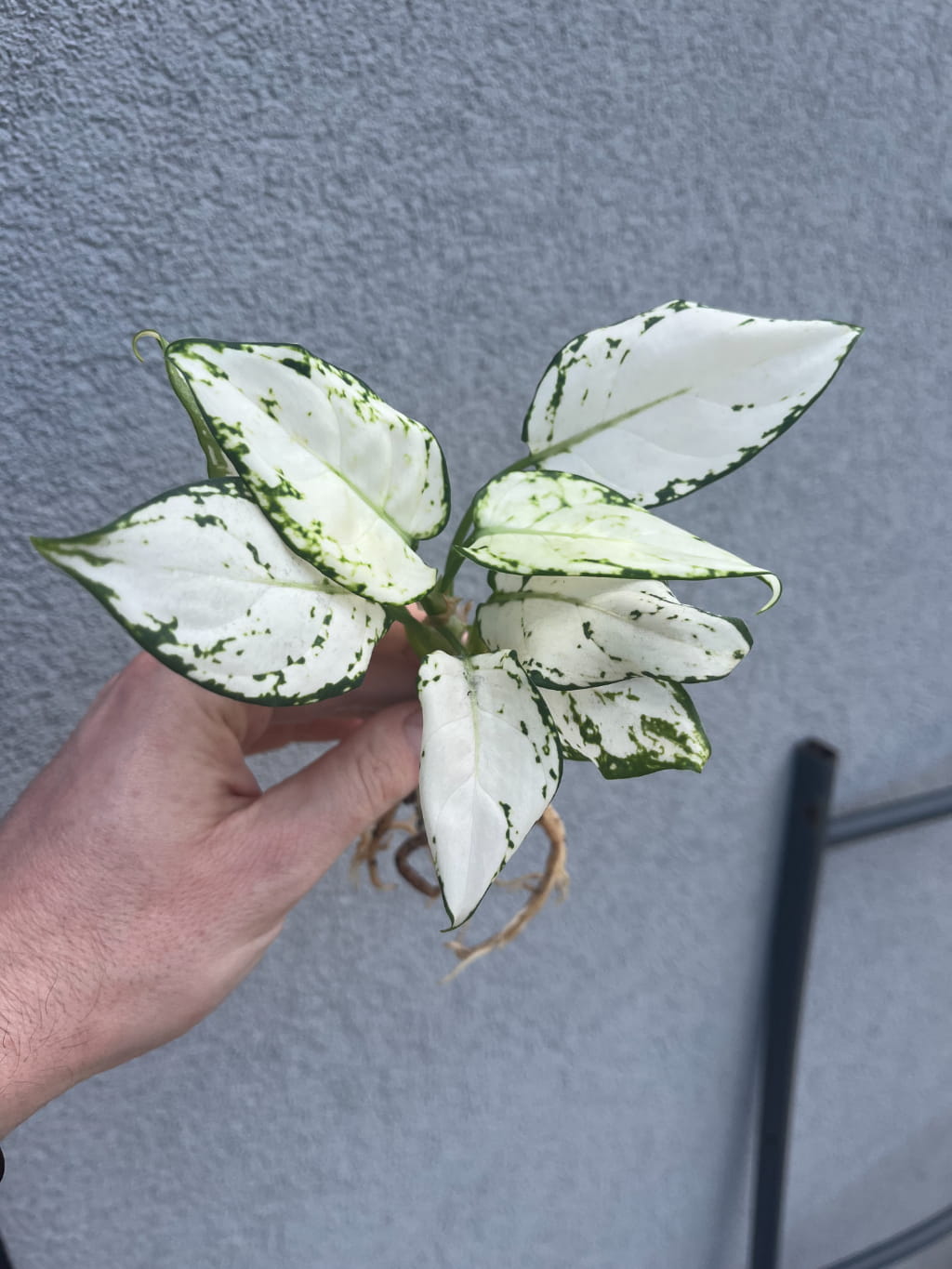
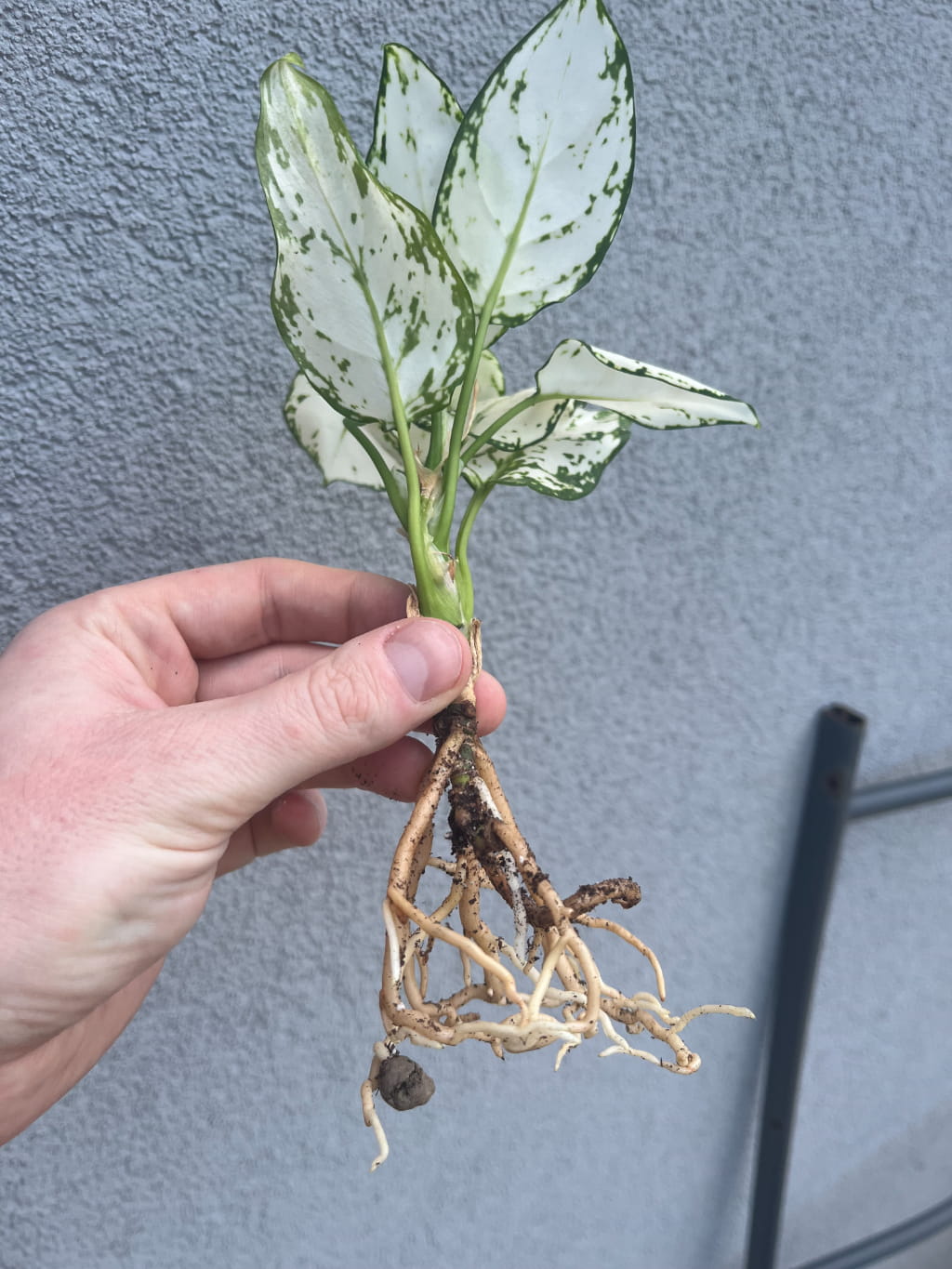
One of the things I love about Aglaonemas is their ability to produce new plants. If your Aglaonema is thriving, over time it will produce small offshoots (pups) at the base of the plant.
This is the easiest way to propagate Aglaonema. When repotting, you can carefully separate a young offshoot so that it retains its own roots. Then plant it in a smaller pot with well-draining soil. My White Joy has rewarded me with three new pups in about 2.5 years. It's wonderful proof that when you give it the right conditions, it will thank you with new growth.
Does Aglaonema Need Fertilizer?
Although Aglaonema is low-maintenance, regular feeding during the growing season helps it produce prettier leaves and supports new growth. It needs the most energy from spring to autumn. During this period, you can feed it with a houseplant fertilizer about once every 2–3 weeks. In winter, when growth naturally slows down, I reduce or completely stop fertilizing. However, with White Joy, one rule applies: more fertilizer doesn't automatically mean a prettier plant.
Over-fertilizing can damage the roots and cause issues similar to overwatering.
Does Aglaonema White Joy Need a Support Pole?
Young plants usually don't need one. However, as the plant grows taller, it may start leaning toward its main light source. That's exactly what happened with my White Joy.
Since it had grown taller and developed a lot of leaves, it began to lean slightly to one side. I solved it with a simple solution – a wooden plant support from our workshop.
I used our Monstera support pole, which gently guides the plant without disrupting its aesthetic. In my opinion, a support pole for larger Aglaonemas is a great way to keep the plant upright and preserve its natural shape.
Most Beautiful Aglaonema Species and Varieties
Even though White Joy is my personal favorite, Aglaonemas offer a huge variety of beautiful cultivars. If you like this type of plant, other Aglaonema varieties are definitely worth checking out.
Aglaonema Silver Bay
Silver Bay is a very popular cultivar. It features a silver center on its leaves with green margins. It has a bit more green than White Joy, so it can handle slightly lower light. It's great for anyone looking for an elegant, low-maintenance plant.
Aglaonema Silver Queen
Silver Queen is a classic among Aglaonemas. Its elongated leaves with silver patterns look very refined and fit nicely into both modern and natural interior styles.
Aglaonema Maria
If you like deep green plants, Maria might be the right choice. It features darker leaves with subtle markings, creating a calmer, more natural look.
Aglaonema Pink
Pink Aglaonemas are among the most eye-catching. Their leaves combine green, pink, and sometimes red tones. Compared to White Joy, they look bolder and draw even more attention. I've had a tiny one at home for about 1.5 years – a lovely little plant as well.
Aglaonema Red
Red cultivars are among the most colorful Aglaonemas. They are ideal for anyone who doesn't want just a classic green houseplant, but is looking for something vibrant.
Aglaonema Cutlass
Cutlass features narrower, elegantly slender leaves. It's quite different from typical broad-leaf Aglaonemas and looks great on shelves or in narrower spaces.
Is Aglaonema Toxic?
This is a very common question: Is Aglaonema toxic?
Yes, Aglaonema belongs to plants that are not safe for consumption. It contains calcium oxalate crystals, which can cause oral irritation or digestive distress if chewed or ingested. If you have young children or pets at home, I recommend placing the plant out of their reach. However, for normal plant care and handling, there's no need to worry.
Frequently Asked Questions About Aglaonema (FAQ)
How often to water Aglaonema?
Water Aglaonema as needed, not on a strict calendar schedule. Allow the topsoil to dry out slightly before watering again.
Is Aglaonema good for beginners?
Yes. Thanks to its resilience, it is an ideal houseplant for people who are just starting out with plant care.
Can Aglaonema stay in deep shade?
Complete shade is not good for it. It can tolerate lower light, but it needs plenty of bright indirect light to maintain its beautiful leaf pattern.
Can White Joy be placed in the bathroom?
If the bathroom gets enough natural light, it can thrive there. Without a window, however, it won't have enough energy for healthy growth.
Why is my Aglaonema not growing?
The most common reasons are: insufficient light, overwatering, depleted soil, or temperatures that are too low.
Why does White Joy have fewer white leaves?
In lower light conditions, the plant may produce more green leaf areas because green cells help it utilize available light more efficiently.
Where is the best spot for an Aglaonema?
It prefers a bright location without direct sunlight.
How fast does Aglaonema grow?
It grows at a slow to moderate pace. Its advantage is that it maintains a neat, compact appearance for a long time.
My Experience with Aglaonema White Joy in Conclusion
If I had to pick a plant to recommend to someone who wants a beautiful interior without daily care, Aglaonema White Joy would definitely be near the top of my list.
Over more than two years, it has shown me that you don't need to be an experienced gardener to have a stunning plant at home. Just give it the right light, don't overwater it, and listen to its signals.
That's what's so wonderful about houseplants – each one gradually shows you what it needs. White Joy isn't just a room filler. It's a plant you'll notice. And often, a plant your guests will notice, too.
Do You Like Aglaonema White Joy?
If you're looking for an elegant houseplant that combines easy care with a striking look, it might just be the perfect choice for you.