
New Year, New Growth: How to Prepare Your Home Jungle for 2026
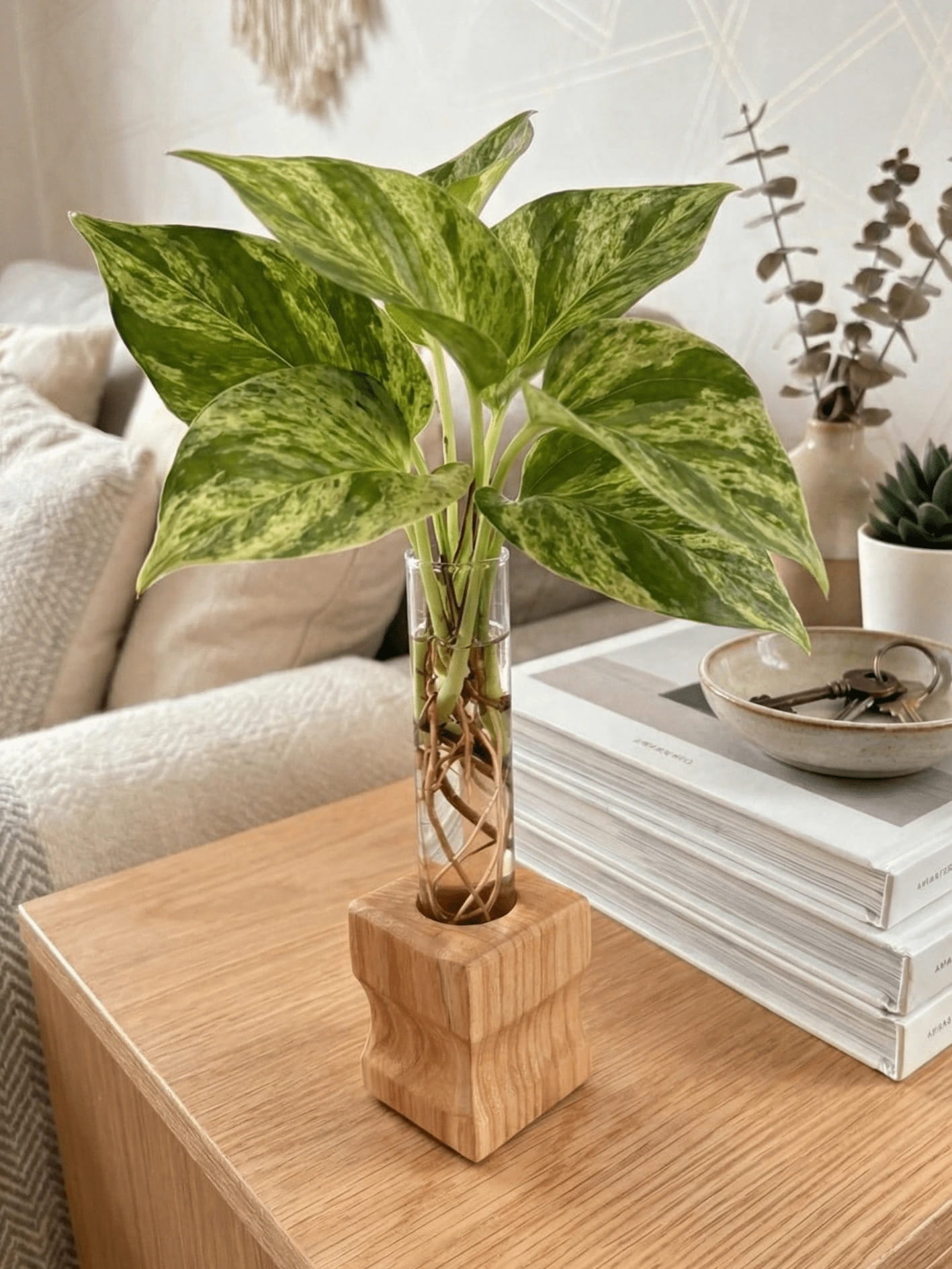
The New Year often brings the need for change. In our homes, our habits, our lives. While nature outside sleeps under a blanket of cold, our interiors can be a place where life is just awakening.
For us, the community of plant, wood, and natural design lovers, January isn't just about gray days. It's a time for planning, rooting new dreams, and preparing for the season to come. At WoodenBotanery we believe that caring for indoor plants is a reflection of caring for oneself. That's why we've prepared a comprehensive guide on how to step into 2026 on the right (green) foot.
In this article, you will learn:
-
Which green resolutions make sense and will realistically improve your life.
-
How to ensure your indoor plants survive the winter in good health.
-
Why 2026 is the year of biophilic design and what it means for your interior.
-
The secret to successful winter plant propagation that will save you money in the spring.
1. Green Resolutions: More than just empty promises
We all know the classic New Year's resolutions – lose weight, stop smoking, exercise more. However, they often fail because they are based on deprivation. What if this year we tried resolutions based on creation and growth?
Trend analysis in the gardening community shows that 2026 will be about returning to roots and sustainability. Here is our selection of resolutions that will bring joy to you and your household:
"I will learn to propagate, not just buy"
It's easy to go to a store and buy another plant in a plastic pot. However, the real challenge and joy is growing a new plant from a cutting.
-
Why try it: It's eco-friendly (no new plastics), economical (free plants), and incredibly satisfying.
-
How to do it: Start with simple species like Pothos (Epipremnum) or Monstera. All you need is one healthy cutting with an aerial root, clean water, and patience.
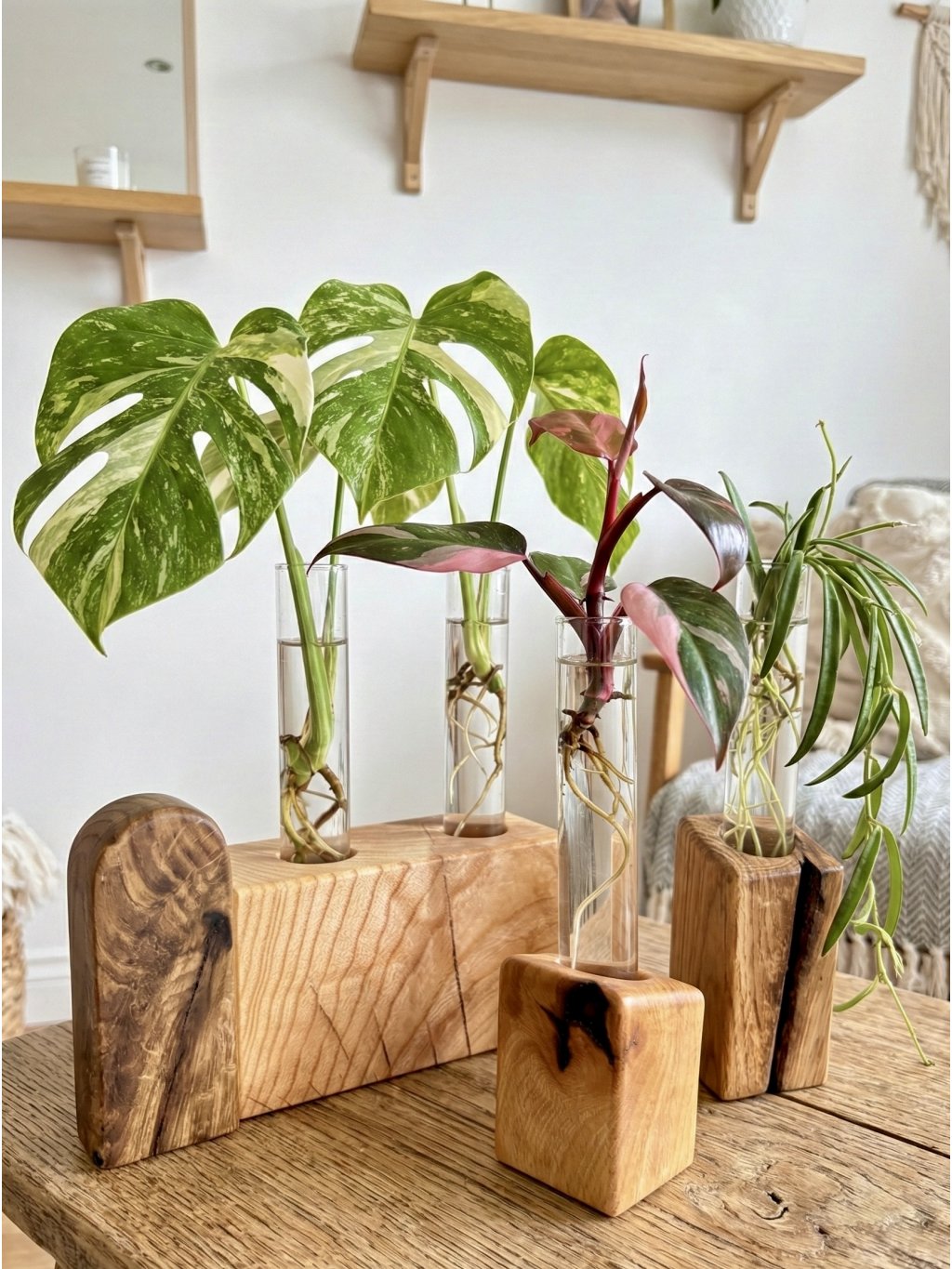
Check out our designer Plant Propagation Stations
"I will create a sustainable cycle"
This year, focus on what you throw away.
-
Composting: Even in an apartment, you can compost using a vermicomposter (worms) or the Bokashi method. Your organic waste will turn into "black gold" for your plants.
-
Rainwater: If you have the option (balcony, garden), start collecting rainwater. It's soft, chlorine-free, and plants love it much more than hard tap water.
"I will grow for health"
Plants are not just decorations. Many studies confirm their ability to clear the air of toxins.
-
Goal: Add at least one strong air "purifier" to your collection, such as a Snake Plant (Sansevieria), which produces oxygen even at night, or a Dracaena.
2. Winter Survival Kit: How to keep your jungle alive until spring
Winter is the most challenging period for indoor plants. The combination of short days (low light) and the heating season (dry air) is stressful for tropical plants. Many of them enter a state of dormancy.
Here are 5 key rules for winter care that you shouldn't forget:
A. Light is a scarce commodity
In winter, the intensity of sunlight drops dramatically. A plant that was happy 2 meters from the window in the summer might be starving now.
-
Solution: Don't be afraid to move plants directly to the windowsill (watch out for drafts!) or as close to the window as possible.
-
Tip: Dust on leaves acts like a sun visor. Regularly wipe leaves with a damp cloth. This can improve photosynthesis by tens of percent.
B. Watch the watering: Less is more
This is the most common mistake that "kills" plants in winter. Since the plant isn't growing and it's colder, it uses significantly less water.
-
Rule: Before every watering, stick your finger into the soil at least 2-3 cm. If it's moist, do not water. Overwatering combined with cold temperatures immediately leads to root rot.
C. Air humidification
Radiators often dry the air below 40%, which tropical plants (Calathea, Alocasia, Maranta) cannot stand. The tips of their leaves will start to turn brown.
-
Solution: Use air humidifiers, bowls of water on radiators, or group plants together. This creates their own microclimate where they share moisture with each other.
D. No fertilizing
Do not fertilize plants during dormancy (approx. October - February). They don't need nutrients to grow, and fertilizer could burn their roots. The exception is plants that are currently blooming or are under artificial lighting and still growing.
3. Interior Trends 2026: Return to nature and "Biophilia"
The New Year is an ideal opportunity for a little interior change. If you follow global design, you've definitely caught the concept that will define 2026: Biophilic Design.
What is Biophilic Design?
It's not just about having a flower pot in the room. It's a philosophy that seeks to restore human connection with nature in a modern environment. People have an innate need to be surrounded by natural elements, which has been proven to reduce stress and increase creativity.
How to bring this trend into your home with WoodenBotanery?
-
Breathable materials: 2026 says a final goodbye to sterile plastics and glossy synthetic surfaces. Raw wood with visible grain, stone, clay, rattan, and glass are coming to the forefront.
Our tip: Our wooden plant stands are treated to highlight the natural wood grain. Every piece is an original, just like in the forest.
-
Earthy Tones: The color palette for 2026 is warm, calming, and "grounding". The main colors are Cloud Dancer (a softly tinted white), Mocha Mousse (a warm coffee brown) from 2025, terracotta, moss green, sand beige, the delicate Faded Petal (pink-cream) for gardens and Secret Safari (yellow-green) for interiors.
These colors form a perfect backdrop for the lush green of your plants. Wooden accessories in these interiors do not look like a foreign element, but as an integral part of a harmonious whole.
-
Organic shapes: Sharp edges and strict geometric lines are stepping aside. The trend is round curves, circles, and asymmetrical shapes that imitate the imperfection of nature.
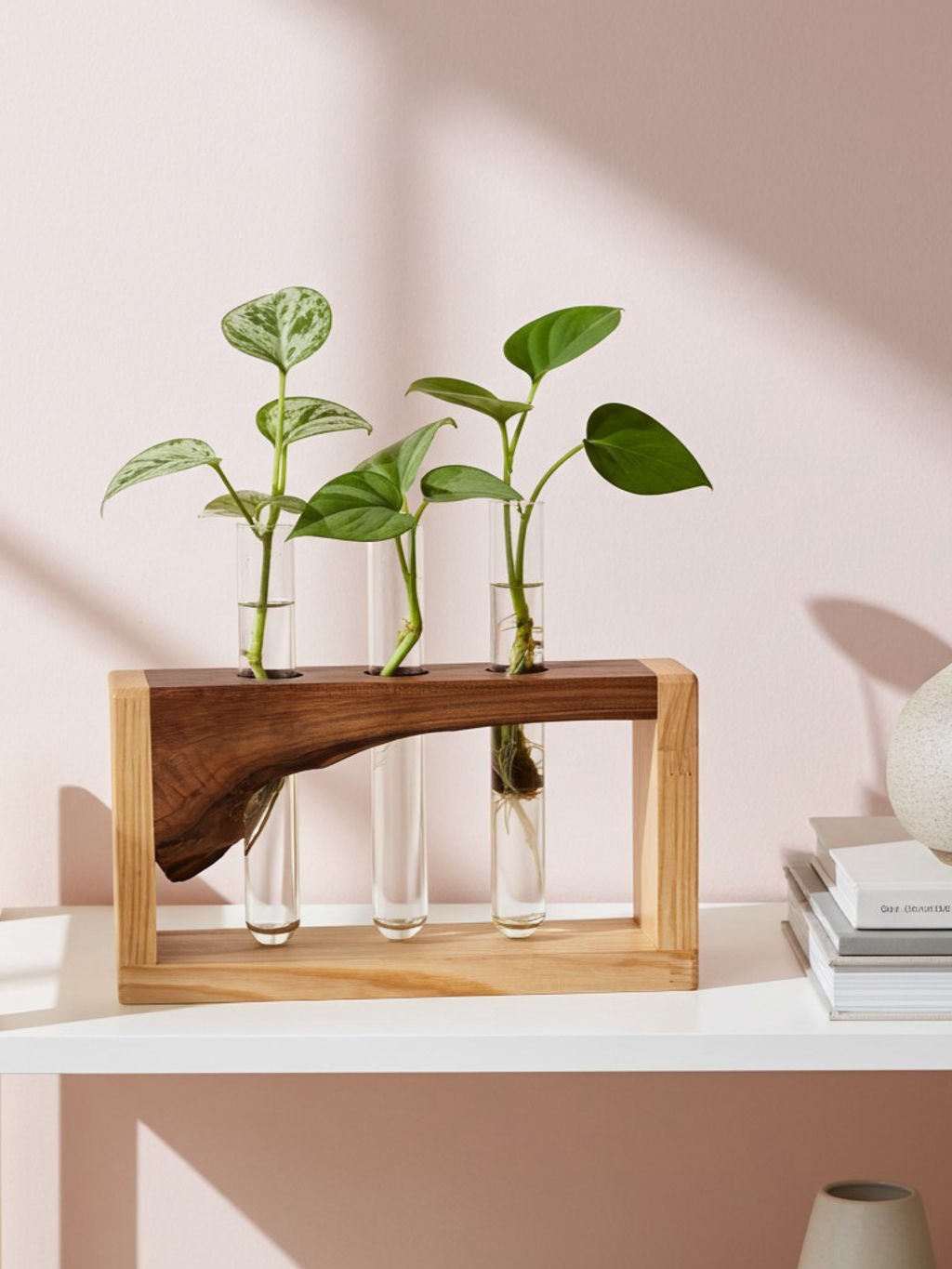
4. Winter Plant Propagation: Get ready for spring right now
You might think plant propagation is an activity reserved for spring and summer. That's not entirely true. Although it goes slower in winter, with our tips you can be successful even in January.
Why propagate in water (Hydroponically)?
Water propagation is the cleanest and most aesthetic way to get new plants. Plus, in our glass test tubes, you can watch the entire root-forming process, which is a fascinating show for both adults and children.
Tips for successful winter rooting:
| Factor | Winter recommendation | Why is it important? |
| Heat | Keep cuttings warm (20-24°C). | Roots need heat to grow. A cold windowsill will slow the process or cause rot. |
| Water | Change the water every 5-7 days. | Standing water loses oxygen and breeds bacteria. Use room-temperature water that has been sitting out. |
| Light | Maximum indirect light. | Without light, the plant lacks the energy to create new cells. |
| Time | Patience (4-8 weeks). | Plant metabolism is slower in winter. What takes a week in summer takes a month in winter. |
What plants to propagate in winter?
Hardy aroids are ideal: Monstera deliciosa, Monstera Adansonii (Monkey Mask), Epipremnum (Pothos), Philodendron scandens, or Syngonium. These species are resilient and tolerate the water environment well even in winter.
Want to start? Check out our designer Plant Propagation Stands
5. What are we planning at WoodenBotanery?
While you are resting and planning, our workshop smells of wood and new ideas. For us, 2026 is a year of innovations that still honor the tradition of craftsmanship.
What can you look forward to?
-
Portfolio expansion: We are working on new types of hanging systems that will allow you to use vertical space (ideal for the "Urban Jungle" trend in small apartments).
-
Education: We want to be more than just an e-shop. We are preparing a series of guides and videos to help you become the best plant growers.
Conclusion and Challenge No matter how long your list of resolutions is, don't forget the most important thing – to slow down. Caring for plants teaches us patience. A leaf won't unroll faster if you pull on it.
We wish that 2026 is a year of robust health, strong roots, and new leaves. May your home be a place where both you and your green family feel good.
Happy New Year from the WoodenBotanery team!